
AFK Journey
FARLIGHTRole Playing
4.510.35K Reviews
- Version
- 1.7.31
- Installs
- 5.00M
- Age Rating
- Teen
Screenshots





Our Review of AFK Journey
 Analysis by Appyee
I approached AFK Journey: Homestead as a role-playing game for someone who wants progress without having to treat a phone game like a second job. Its mix of exploration, team combat, and homestead building gives short visits a purpose, while leaving room to plan when I feel like staying longer. The first useful expectation to set is that this is not only a decorating game: the home base and the adventures are connected parts of a broader routine.
Getting Started with Your Homestead
The first thing you'll notice when you dive into AFK Journey: Homestead is its charming art style. The animations are smooth, and the colors are vibrant, making it a joy to explore your budding homestead. The game kicks off by guiding you through the basics of setting up your home base. It’s surprisingly intuitive, even if you’re new to this genre.
You start with a small plot of land, and your job is to expand and develop it into a thriving community. The game does a fantastic job of balancing guidance and freedom. You’re given goals, sure, but there’s plenty of room to make your own choices and see where they lead you.
What to Expect from the Daily Loop
The appeal, for me, is the rhythm between making a decision and letting the game carry some of the routine forward. You can check your team and base, choose what deserves attention, then step away instead of constantly tapping through battles or waiting for every small task. That makes it easier to fit into a commute, a lunch break, or a few minutes before bed. It is still a game that rewards returning and making choices, not a completely hands-off experience.
That distinction matters if you are choosing between this and a traditional role-playing game. A story-heavy RPG may offer more uninterrupted narrative and direct control over every fight; this one puts more weight on assembling a team, managing progress, and checking back at a comfortable pace. If your favorite part of an RPG is precise moment-to-moment combat, the automated feel may be less satisfying. If you like setting a plan and seeing it pay off later, the structure makes more sense.
Adventures Await
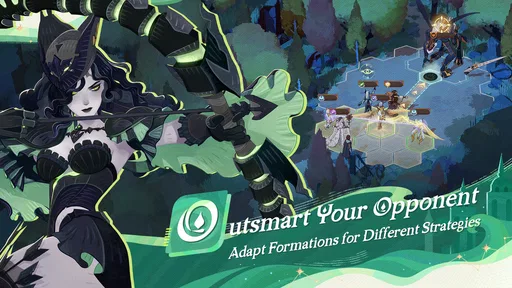
One of the highlights of the game is its adventure mode. This isn’t just about building; you’ll be sending your characters on quests to gather resources and unlock new areas. The combat system is straightforward yet satisfying. You’ll assemble a team, strategize, and then let them do their thing. It’s perfect for anyone who appreciates a game that respects their time.
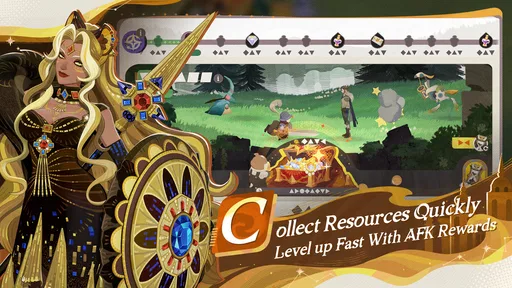
What’s cool is that the game continues to progress even when you’re not actively playing. This AFK (away from keyboard) mechanic means you can log back in to find your team has been busy gathering resources and experience. It’s a nice touch that keeps you engaged without demanding constant attention.
Your First Meaningful Success
For a new player, I would define an early win as more than simply clearing the next fight. It is understanding why your team stalled, making one sensible adjustment, and seeing your progress resume. When a battle becomes difficult, I would first review the team rather than changing several things at once. A small, deliberate change makes it easier to tell what helped, and it prevents you from spending resources blindly just because a stage feels slow.
The same approach helps with the homestead. Treat each new building or upgrade as a choice about what you need next, rather than assuming every available option deserves immediate investment. If you are short on a resource, focus your attention on the activities that help address that bottleneck. This is a practical way to learn the game’s economy without turning every login into a checklist. The first satisfying cycle is simple: collect what has accumulated, use it toward a clear goal, then leave the next task ready for your return.
A realistic routine might be checking in during a break, collecting the progress waiting for you, and choosing one adventure or improvement before closing the game. Later, after work or school, you can see whether that choice was enough to move forward. Keeping the session focused is useful because the game combines several appealing activities; without a small priority, it is easy to bounce between the base, the team, and social features without finishing anything.
Community and Customization
The community aspect of AFK Journey: Homestead is another feature that stands out. You can join guilds, participate in events, and collaborate with other players. This social element adds depth and makes the world feel alive. Plus, the chat is a great way to share tips and tricks with fellow players.
Customization is a big part of the fun here. You can personalize your homestead with a variety of decorations and buildings. It’s not just about aesthetics, though; these choices can affect your resource production and overall strategy. It’s a bit like playing a giant puzzle, figuring out the best layout and upgrades to optimize your community.
Small Choices That Save Friction
One useful habit is to decide what you are trying to improve before spending accumulated resources. It sounds obvious, but a base-builder can make every upgrade look equally inviting. I get more from the game when I connect a purchase to a specific need—progress in an adventure, a resource shortage, or a homestead goal—instead of spreading investment across whatever is currently visible. That also makes it easier to notice whether a decorative choice is worth its cost to me or whether I would rather prioritize development.
Team changes benefit from the same restraint. When a fight is a close call, changing one part of the lineup at a time gives you a clearer read on what is working. If you replace several characters or make multiple upgrades together, you may win, but you learn less about the reason. This is not a complicated tactical simulator, yet paying attention to the team you send out can make the difference between steady progress and feeling as though you are waiting for numbers to rise.
Social play is best treated as an option, not an obligation. Joining a guild can make the world feel less solitary and give you people to ask when a system is confusing, but players who prefer quiet solo play do not need to make chat the center of their experience. I would try the community side if you enjoy shared goals; if notifications and group expectations are what you are trying to avoid, keep your own pace and see whether the other loops are enough for you.
Challenges and Strategy
While the game is accessible, it doesn’t mean it’s a walk in the park. As you progress, the challenges ramp up, requiring more strategic thinking. You’ll need to carefully plan your upgrades and resource allocation. It’s a rewarding experience that keeps you on your toes.
The developers have done a great job of keeping things fresh with regular updates and events. There’s always something new to look forward to, which is crucial for keeping long-term players engaged. The seasonal events, in particular, are a blast, offering unique rewards and challenges.
How It Fits Beside Other RPGs
Compared with the usual mobile RPG built around frequent manual battles, this one is more comfortable for players who want to make decisions in bursts and let progression continue between visits. Compared with a pure management game, it gives your choices a combat and exploration context, so improving the homestead is not the only reason to log in. That hybrid is its strongest point, but it also means neither side should be mistaken for the whole experience: someone seeking deep, hands-on combat may prefer a more action-focused RPG, while someone interested only in designing a settlement may want a dedicated builder.
It is also worth thinking about the spending model before getting invested. The game is free to start, but it includes optional in-app purchases ranging from small amounts to substantially larger ones. I would treat purchases as optional rather than a shortcut you need to make the game worthwhile. If you are comfortable progressing at the game’s own pace and keeping a clear limit on spending, that structure is easier to live with. If you know that timed offers or upgrade prompts make you spend impulsively, it may be better to set boundaries before you begin.
Who Will Enjoy It, and Who May Not
I would recommend it to someone who likes colorful fantasy worlds, incremental base development, and team-based battles that do not demand constant manual input. It is particularly convenient if your playtime comes in small pockets: you can make a decision, close the app, and return when you have another moment. The combination can also suit a newcomer to role-playing games because the opening guides you through the basic home-base loop instead of asking you to understand everything at once.
I would be more cautious if you want a tightly authored story to carry every session, if you dislike progression systems that ask you to return over time, or if you need complete control over each combat action. The game’s relaxed pace is a benefit only when that is the kind of pacing you enjoy. Players who want a demanding tactical challenge from the first minutes may find its approach too gentle, while people who want a game they can finish in a short, self-contained sitting may not enjoy a world organized around ongoing development.
For a first-time player wondering whether a newer phone is necessary, the listed minimum operating system is Android 5.1, and the current version is 1.6.11. The game is free to download, is rated Teen, and is developed by FARLIGHT. Its average rating is 4.6 from around 292,000 ratings, with over 5 million installs; those figures suggest a sizable audience, but they cannot tell you whether its pacing matches your taste. I would use the opening sessions to judge that for yourself rather than assuming popularity means every RPG fan will enjoy it.
Final Thoughts
So, is AFK Journey: Homestead worth your time? I’d say absolutely. It strikes a lovely balance between casual and strategic play. Whether you’re logging in for a quick session or diving deep into strategy, there’s something here for everyone.
It’s a game that respects your time and rewards your efforts, making it perfect for anyone juggling a busy schedule but still wanting to enjoy some quality gaming. If you’re looking for a game that lets you build, strategize, and connect with others all while enjoying a rich, evolving world, give AFK Journey: Homestead a try. You might just find yourself hooked.
My advice is to give it a few sessions with a simple goal: learn how the home base supports your adventures, then see whether you enjoy returning to improve both sides at your own pace. If the loop feels satisfying without purchases or long play sessions, it is likely a good fit. If you keep wishing for more direct combat or a stronger focus on one activity, that is a useful sign to choose a different kind of role-playing game rather than forcing yourself to enjoy this blend.
Verdict
Strengths of AFK Journey
- Engaging idle gameplay with minimal effort.
- Visually appealing graphics and design.
- Diverse character roster with unique skills.
- Frequent events keep the game dynamic.
- Strategic elements enhance long-term enjoyment.
Limitations of AFK Journey
- Requires stable internet connection.
- Some in-game purchases are costly.
- Progress can be slow without spending.
- Limited initial guidance for new players.
- Occasional server lag during peak times.
Other Releases by FARLIGHT
View All
Call of Dragons
Strategy4.4

Clash of Critters
Casual4.2
Similar Picks in This Category
View All
Hair Dye
CrazyLabs LTD4.4

Monster High™ Beauty Salon
CrazyLabs LTD4.5

Bus Simulator - Bus Games 3D
Jima Apps4.4

Flight Pilot: 3D Simulator
Wildlife Studios4.1


Super Stylist Fashion Makeover
CrazyLabs LTD4.4
Frequently Asked Questions
What is the main objective of AFK Journey: Homestead?
AFK Journey: Homestead is a role-playing game where players embark on an adventurous journey to build and manage a homestead. The primary objective is to gather resources, recruit heroes, and engage in battles to expand your territory. As you progress, strategic planning and resource management become essential to advance in the game.
Is AFK Journey: Homestead free to play?
Yes, AFK Journey: Homestead is free to download and play. However, the game includes in-app purchases that offer various items and enhancements. While these purchases can accelerate progress and enhance gameplay, they are not necessary to enjoy the full experience of the game.
What are the system requirements for downloading AFK Journey: Homestead?
AFK Journey: Homestead is available for both Android and iOS devices. For Android, it requires version 5.1 and up, while iOS devices need to run iOS 10.0 or later. Ensure your device has sufficient storage space and meets these requirements for optimal performance.
Can I play AFK Journey: Homestead offline?
AFK Journey: Homestead requires an active internet connection to play. This is necessary for accessing online features such as multiplayer battles, updates, and syncing game progress. Offline play is not supported, so ensure you have a stable connection to fully enjoy the game.
How does the AFK feature work in AFK Journey: Homestead?
The AFK feature in AFK Journey: Homestead allows players to earn resources and experience even when they are not actively playing. This mechanic ensures continuous progression, as your heroes automatically gather materials and fight battles while you’re away, making it ideal for casual players.
Play our best games!


